



How to Choose a B2B Ecommerce Platform Without Wasting 200K on the Wrong One

May 7, 2026
October 1, 2021 by Paul Byrne
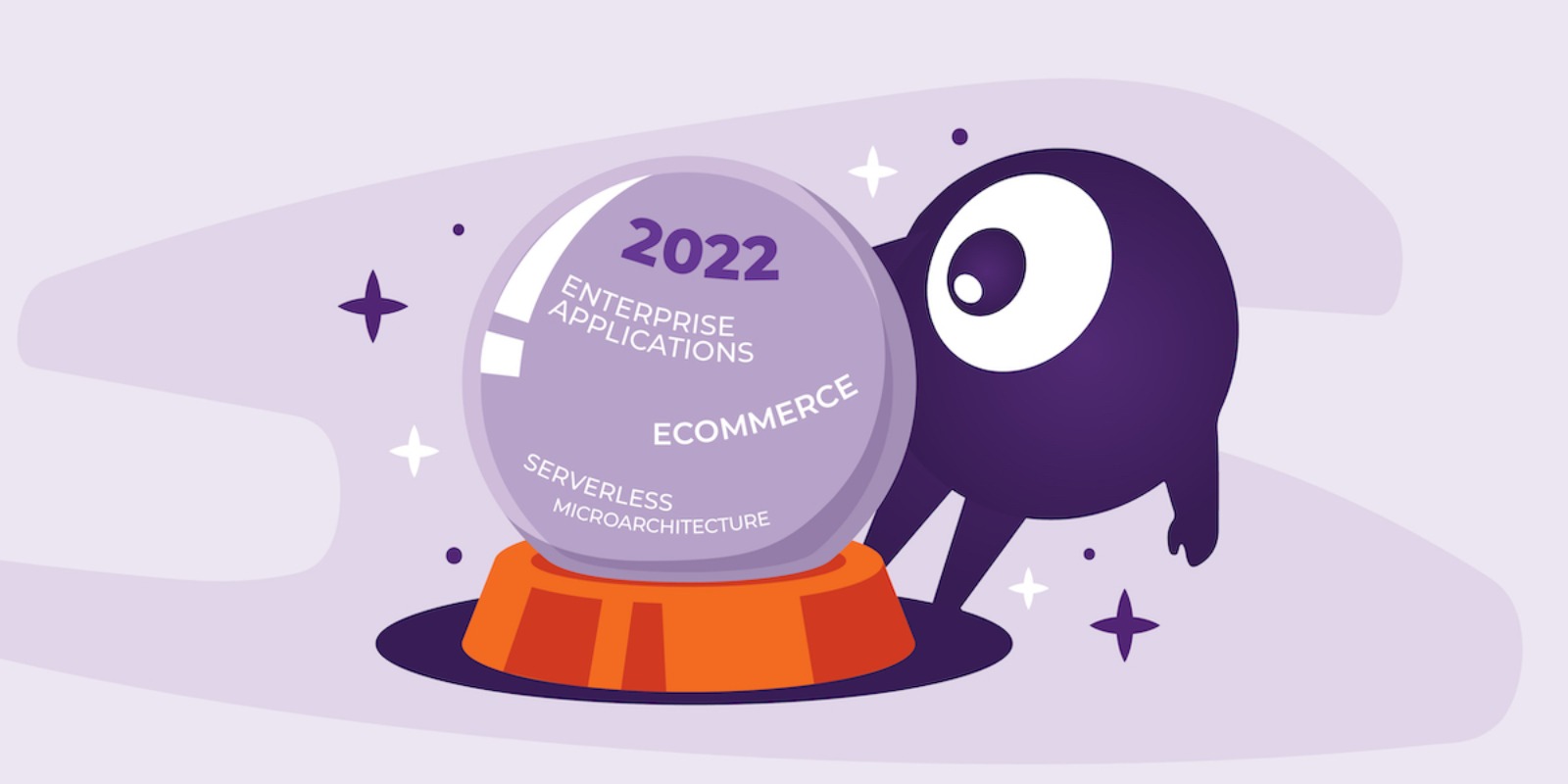
Getting out the ol’ crystal ball can be a toss of the dice and sometimes unpredictable. There are quite a few people who want to know what direction I think things will take in the ecommerce world and enterprise application development.
I don’t believe there will be any big surprises in 2022, but there are a few trends that I believe will mature that will have a lasting effect on Razoyo clients, potential clients and partners.
First, the major usage change of technology-based drivers.
Previously, generational development and innovation couldn’t happen without the use of technology-based drivers. Surprisingly, very few of the drivers for 2022 will continue being technology-based. Technological change from year-to-year is often foreseeable and rarely dramatic. Much of the headline-grabbing things we see (i.e., foldable screens (which suck by the way) will become pale in comparison to the impact of societal trends.

In most cases, technology adapts to fit the changes in society rather than being the driving force. Thus, it is no longer necessary to have a deep understanding of advances in engineering, materials science, or progress on hard non-deterministic polynomial-time (NP) problems to look out for a year in advance.
Let’s take a closer look at the current changing trends and what consumers can expect in 2022.
For years we’ve rolled our eyes at the little chat box that appears in the lower-right corner of your screen on websites. Anxiety levels rise as the inevitable “Can I help you with something?” message appears. We frantically search for the “X” button that closes the window so that we can actually see the description of the item we were shopping for or see the latest paparazzi photo on the gossip column. How DARE it get between us and the website!
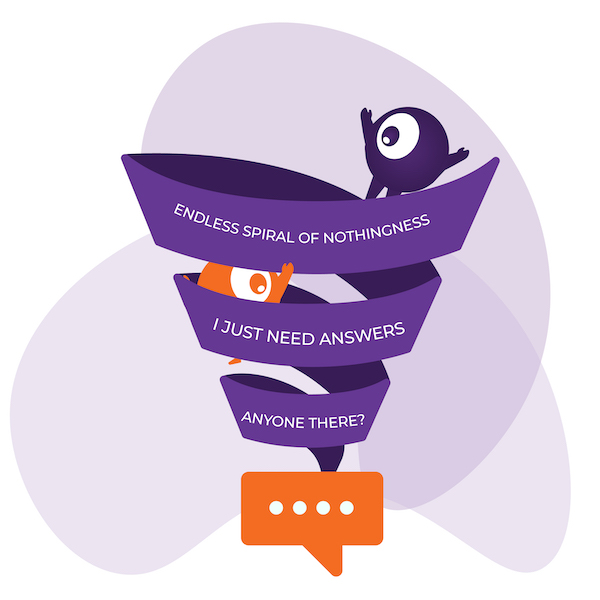
The never-ending chat box spiral becomes frustrating when trying to request help! We put our name, email address, phone number, and choose the category for our query from the drop-down. We think, “They must need that to route us to the right person,” or declare with hope that “They must have a specialist in there that I need to know!”
Then comes the disappointment… It’s a chat bot!! The bot finds some related articles, none of which are related to our query, then proceeds to inform us someone will be in contact when available if none of our questions are answered.
Social Media Joins Digital Commerce It’s simple to see why social media is quickly turning to easy ecommerce… bring your products to where the people are. Shopify’s soaring valuation coupled with the deep pockets that profit hungry Social Media platforms have = the fastest-growing area of the world economy: Digital Commerce.

Facebook jumped into ecommerce in a big way when the pandemic hit in early 2020. Razoyo published a guide to help small businesses survive as part of the Offline2On initiative with numerous good-will companies such as: BigCommerce, ShipperHQ and more. Since that time, Facebook has revised and expanded its offering; this poses an attractive option for those whose audiences are built there. When you build your store on Facebook, you can also sell to Instagram followers - something that was previously the purview of big brands.

SnapChat has been accelerating efforts to facilitate transactions through their system as well.

YouTube has also thrown its hat into the ring with YouTube merch shelf. Currently, it is only available to channels with over 10,000 subscribers or musicians, but I believe that is only the starting point.
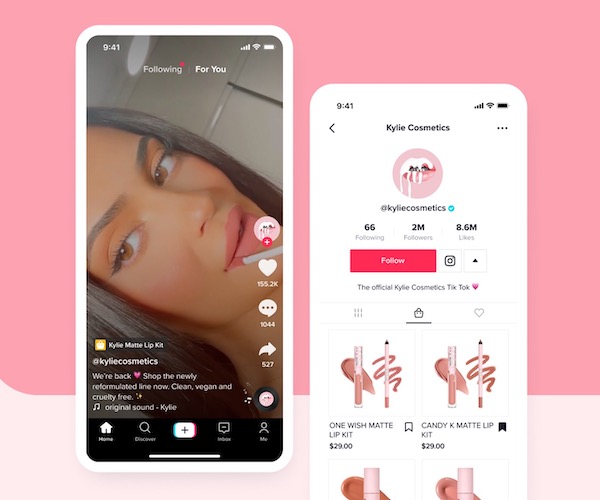
TikTok has also introduced the TikTok Shop which is open to most users and has combined both affiliate and direct selling in a unique way.

Twitter introduced its own confusing digital commerce play. Whatever, Dorsey!
The global pandemic has accelerated the acceptance of new norms when it comes to shopping such as:
However, the term ‘ecommerce’ is beginning to feel narrow. Is it ‘ecommerce’ if I go into a store, scan my items and pay with an app on my phone?
What about if I pick up my items ordered from the app and pay at the kiosk? If a store associate helps me check out or bring my purchase curbside, is it still ‘ecommerce’?
It’s all commerce now and the lines between online and in person commerce will soon be completely meaningless due to blurred lines. Don’t believe me? Put it to the test and see if the lines have blurred for you:
Self-score your exam. How’d you fare?
Who knows! My prediction for cryptocurrency is that it will continue to be one of the most confusing topics in 2022.
It’s not all about being a consumer! There are still those among us who actually write the software, and put together the systems that create and support the capabilities of drivers and acceleration a little more closely.
To most people these are buzzwords, but they actually have profound meanings for us. Razoyo builds systems that need both AI and BigData to function on servers we haven’t seen before; this is done with a mix of both code and configuration. Not only is this how it works now, but also for the foreseeable future.
Some tangible examples are:
When you check out online: your taxes, shipping costs, delivery times, and other key data are calculated by these expert systems. The store you checkout on simply reaches out via an Application Programming Interface to get the information needed.
If you’ve ever logged into a site using credentials from another site (e.g., login with Google, Facebook, Twitter) that website has usually offloaded site authentication to another provider. For developers in small-to-mid-sized businesses, this can save time and improve overall security although it does have the downside of sharing data of your site members with the tech giants. Login with Signal, anyone?
Much of the key open-source software used today (i.e., Magento, Wordpress, Drupal, OroCommerce) are built on a programming language called PHP. Others are built on other popular languages like Nodejs, Ruby, and Python.
These languages were conceived at a time when programs ran on single machines with single CPUs. Nobody needed to worry too much about how to maximize machine performance because it kept executing instruction after instruction. However, that is no longer the case. Think of a system that has to retrieve data from other systems across the internet and deal with large numbers of individual users requesting information at an unpredictable rate (e.g., pages on a web site).
What does the future hold for servers and current systems?
Software runs on servers that have multiple cores, some of which spin up servers on an as-needed basis. To optimize server performance, Razoyo uses languages that were built with multi-core environments in mind such as Elixir and Erlang. There are multiple advantages in terms of fault-tolerance and scalability that are astounding with these languages. We recently rebuilt an enterprise application that enabled a client to reduce their server budget from over $60,000 per year to about $6,000.
While there is some talk of deploying compiled PHP, there is a lot of developer resistance and unnecessary overhead when compared to other options. Not only is it more fault tolerant, but also far more bug resistant. They will still be less popular with the unwashed masses of developers because they are a little harder to get your head around! Languages like Elixir and Scala will continue to gain popularity among CTOs.
While it’s hard to know what the industry as a whole will do, Razoyo will build more systems in functional languages for long-term ROI (i.e., less maintenance and fewer bugs). This provides our clients with superior results and efficiency.
Given the acceleration of digital commerce and the maturation of some key technologies, I expect to see quite a bit of innovation in 2022. I don’t think it will be in the form of a new must-have device or with a brilliant, groundbreaking app, but an improvement in what’s already out there. Most of these improvements will be below the surface and enact key refinements to what we already know.
I’m hopeful that the innovations will lead to connecting humans in a more meaningful way whether that’s sharing your discoveries or being able to talk to someone who can actually help you on your journey.
If you are looking to add more opportunities for customer interactions or refining your own ecommerce or enterprise applications… don’t get stuck in a cycle of chat bots trying to find out where to start. Head straight to the source & start with development experts who can take you through 2022 and beyond.
These links open AI platforms with pre-written prompts about this page.
We use cookies to improve your experience. Do you accept?
To find out more about the types of cookies, as well as who sends them on our website, please visit our cookie policy and privacy policy.


